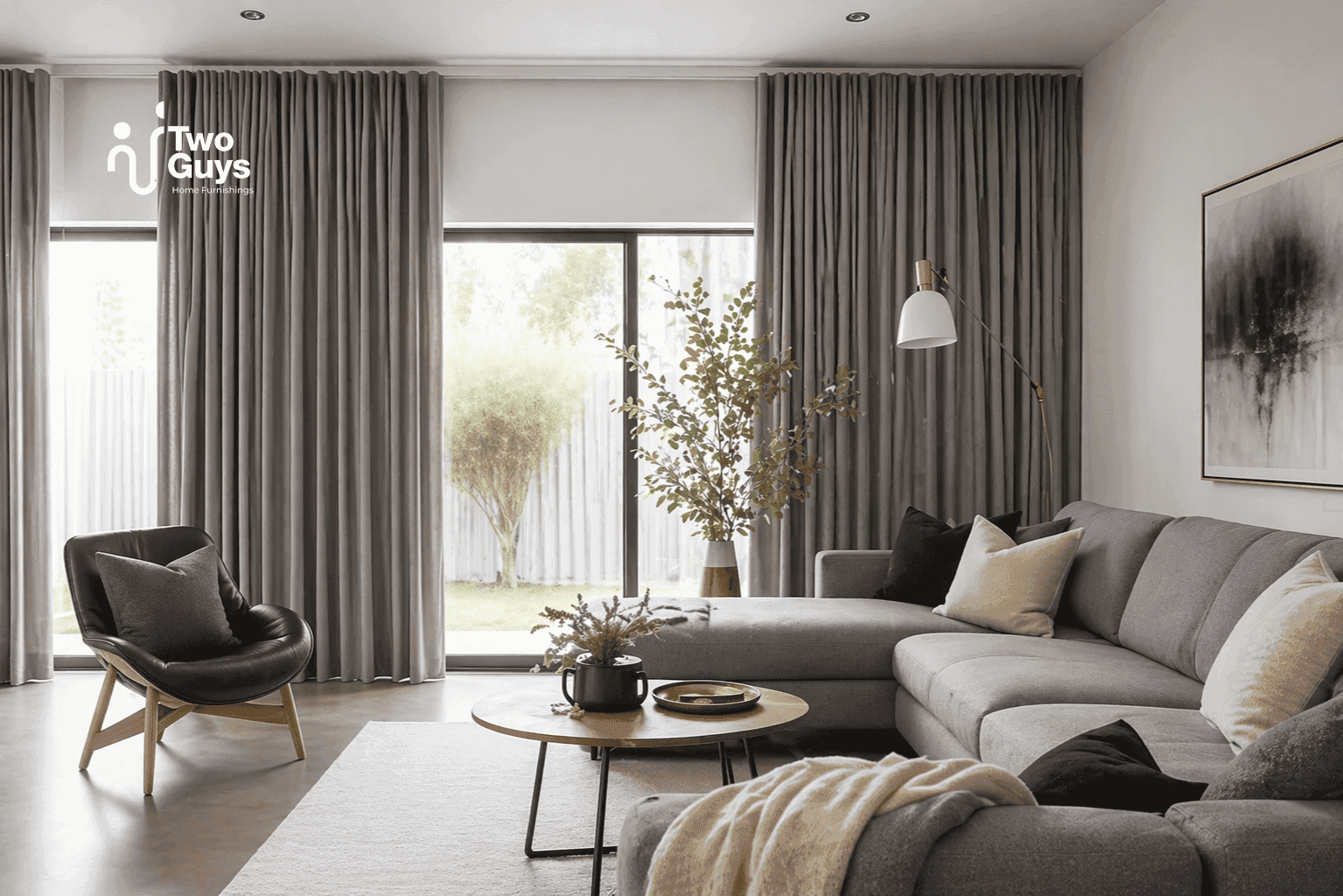
Heat Blocking Curtains Dubai: What Actually Helps in Summer (Fabric + Lining + Fit)
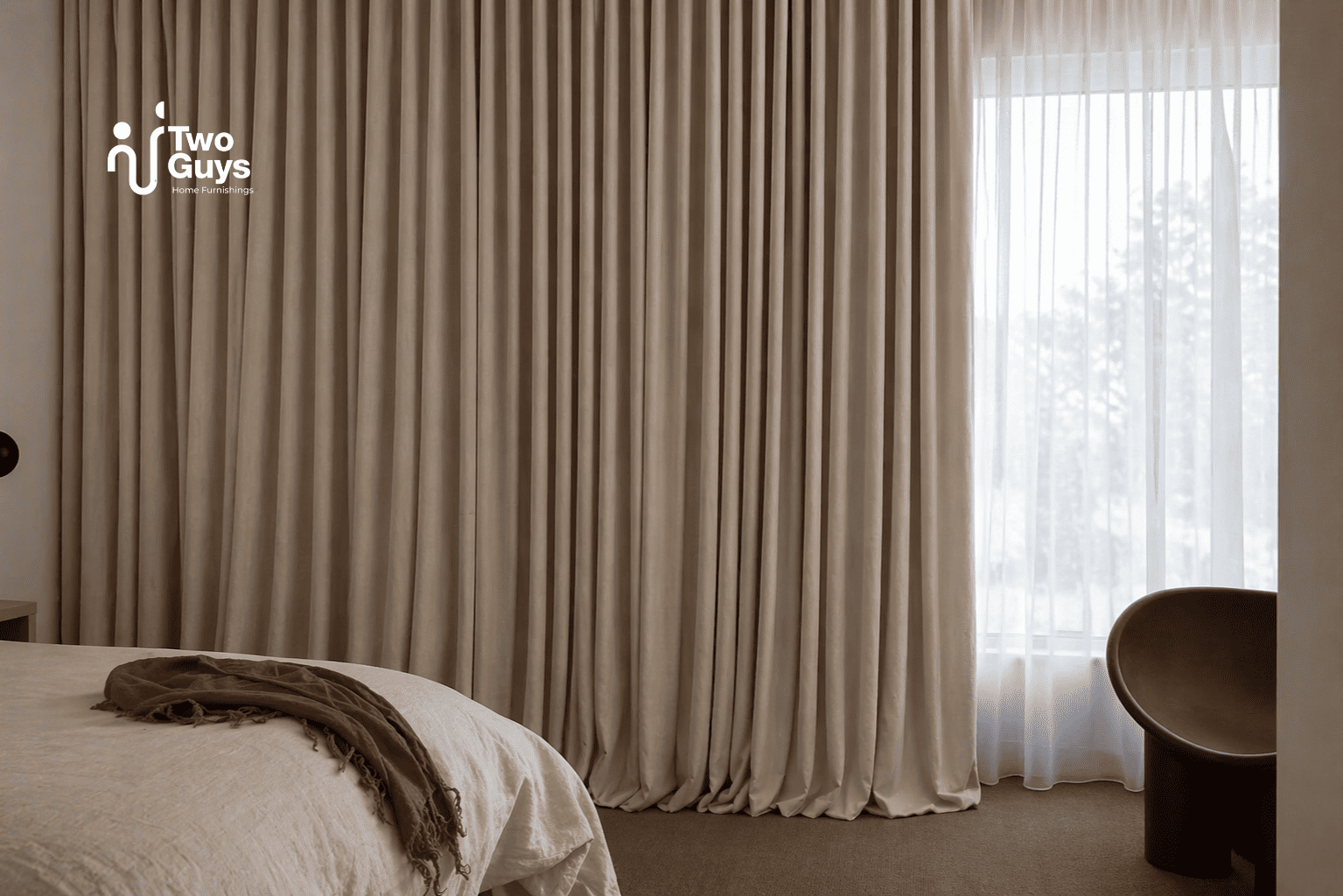
Dubai summer has a very specific kind of heat. It’s not just “hot outside.” It’s the way a room near the window can feel warmer than the rest of the home even while the AC is running. The sofa gets sun-baked. The floor patch near the glass feels like a warm tile. Your living room looks bright, but it’s uncomfortable.
That’s usually when people start searching for heat blocking curtains Dubai and expecting a miracle fabric.
Here’s the honest truth: curtains can absolutely help in summer, but only if you choose them like a system. Fabric alone doesn’t do the heavy lifting. Lining and fit do. And if the fit is wrong, even the best “thermal” curtain will feel average.
We’ll break down what actually works, room by room.
What “heat blocking” curtains can realistically do
Curtains reduce heat mainly by controlling solar gain and creating a buffer layer between the hot glass and your room air. In real Dubai homes, good curtains can help you:
-
Reduce direct sun hitting furniture and floors
-
Cut glare so you don’t keep closing everything and living in darkness
-
Improve comfort near the window, especially in late afternoon
-
Support AC performance by stabilising the “hot zone” near glass
What curtains won’t do:
-
Replace proper glazing
-
Turn a west-facing room into a freezer
-
Fix heat coming from poorly sealed balcony doors on their own
Field insight: most “this room feels hot” complaints are not about overall apartment temperature. They’re about that one zone near the window. Curtains help most when they’re planned for that exact zone.
Step one: figure out what kind of heat problem you have
Before you choose fabric, we ask one question:
Is your main issue direct sun, glare, or warm air radiating from hot glass?
If it’s direct sun (sun patches on floor and furniture)
You need coverage and lining that blocks or reflects sunlight.
If it’s glare (screens and reflective surfaces)
You need a solution that filters light without turning the room into a cave.
If it’s radiating heat from the glass
You need a better “barrier” effect, which comes from lining and fit more than fabric thickness.
Fabric: what works best for summer comfort
Let’s keep this simple. In Dubai, fabric choice should focus on two things: drape and density.
Heavier drape fabrics (good for heat control, if your room can carry them)
These feel more substantial and can help reduce heat transfer, especially with the right lining. They work well in:
-
Master bedrooms
-
West-facing living rooms
-
Media rooms
Linen and linen-look fabrics (good for a lighter feel, but not a heat solution alone)
Linen looks premium and airy, but linen by itself is not a heat blocker. Linen becomes a heat solution when it’s paired with:
-
a proper lining
-
a good fit that reduces gaps
Polyester and blended fabrics (practical, stable, great with lining)
Polyester gets underestimated, but for Dubai daily life it’s often the smartest base fabric because it:
-
holds shape well
-
handles frequent use
-
works beautifully with blackout or thermal linings
If your priority is performance, not “Instagram texture,” good-quality blends can be the best choice.
Lining: the part that can actually block the heat
If you only remember one thing from this article, remember this: lining is where heat control happens.
Blackout lining
Blackout lining helps with:
-
blocking light strongly
-
reducing direct sun impact
-
improving sleep and comfort
It’s a strong option for bedrooms and rooms where you want darker control. In living rooms, blackouts can feel too heavy in the daytime unless you layer sheers.
Thermal lining or coated linings (where appropriate)
Some linings are designed to reflect or reduce heat transfer more effectively. The key isn’t the label, it’s the setup:
-
how it’s installed
-
how well the curtain seals at the sides and top
-
whether the curtain covers beyond the window frame
Layering: the smartest “Dubai summer” approach
In many homes, the best heat and comfort setup is:
-
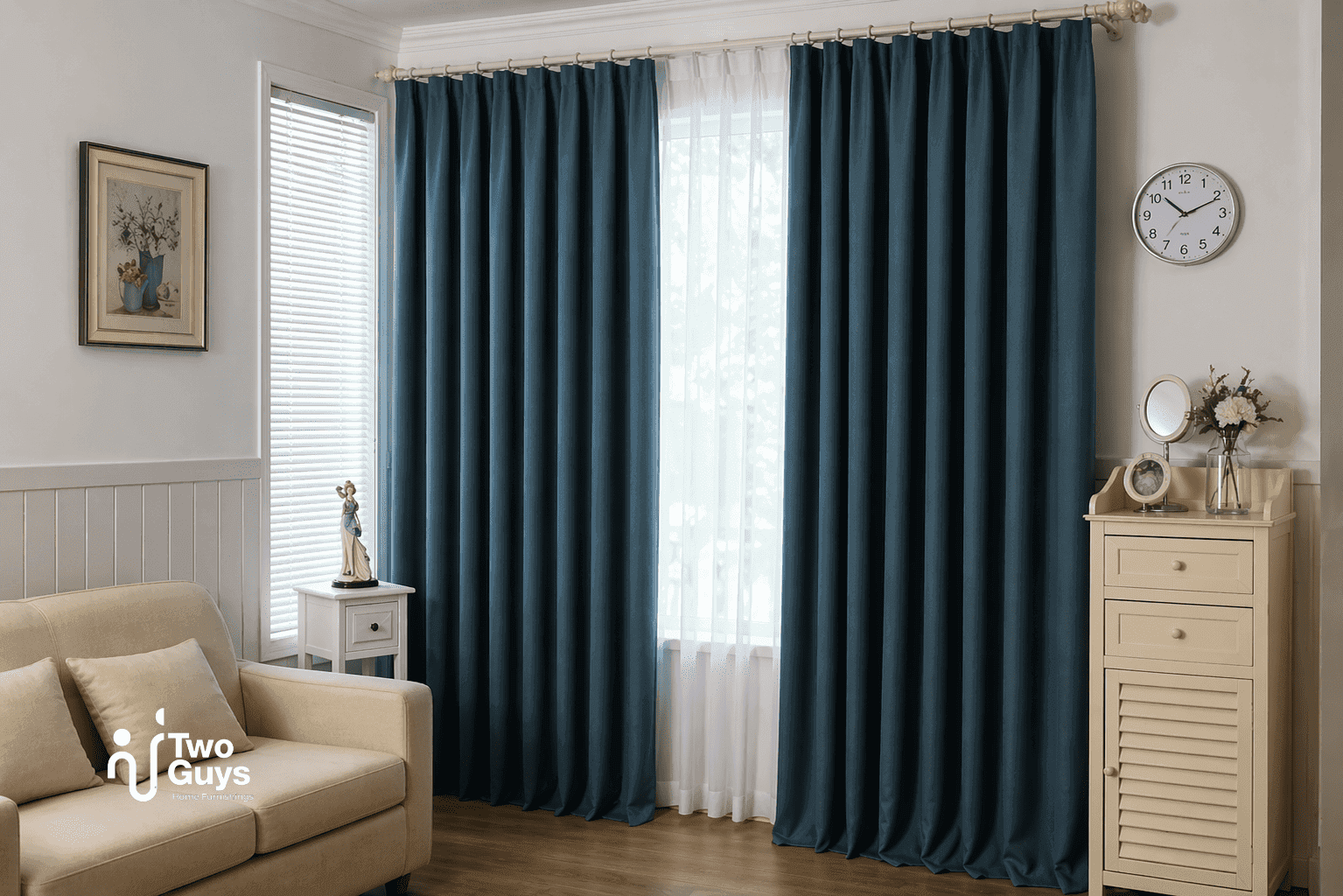
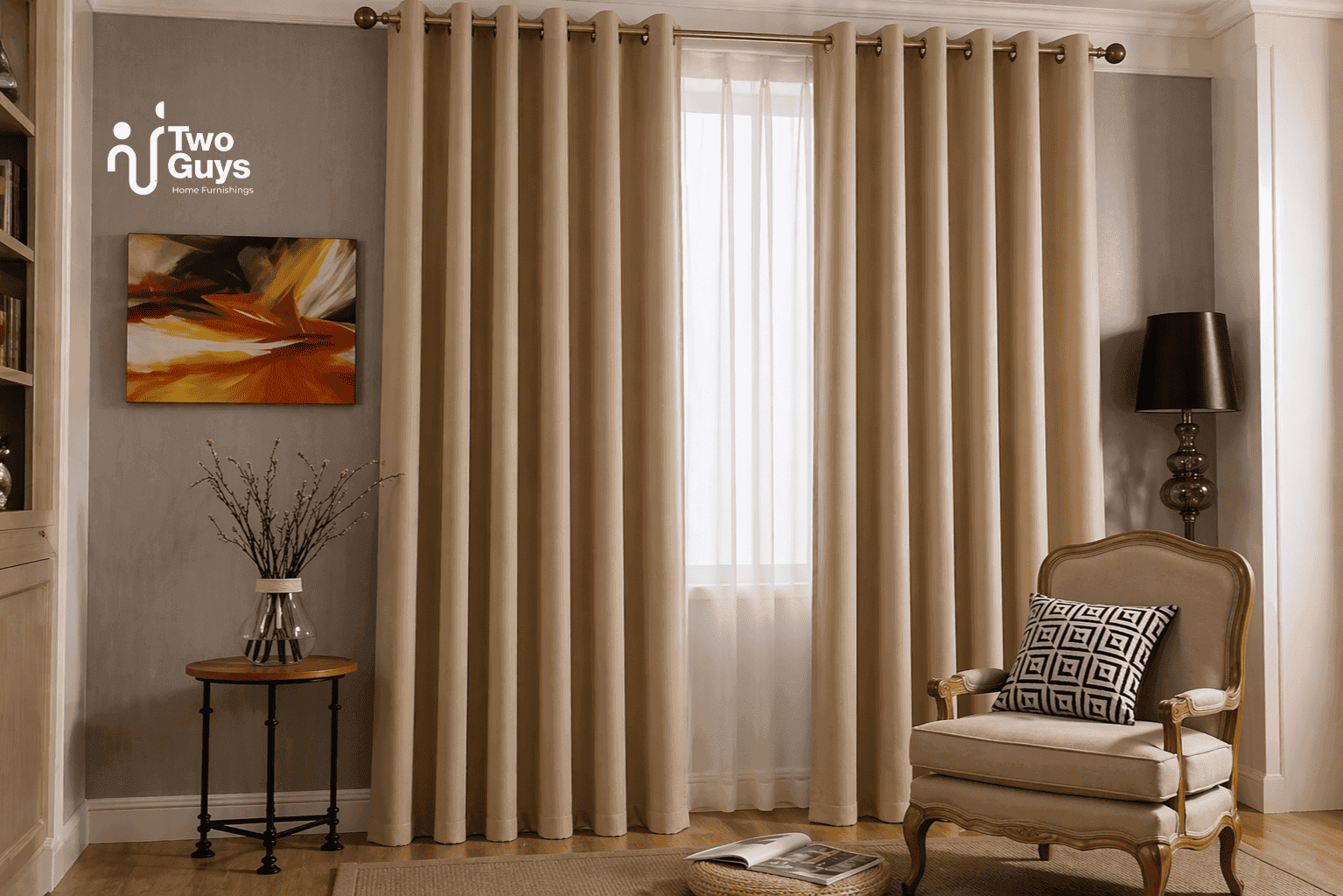
Sheers for daytime glare control and bright comfort
-
Blackout or lined curtain for peak sun hours and night
This keeps your room usable in the day and protected during the harsh hours.
Field insight: in many Dubai apartments, people buy blackout curtains for heat, then keep them open all day because the room feels too dark. Layering is what fixes that.
Fit: why the “heat blocking” result fails in most homes
Heat and light leak through gaps. Not just fabric.
To actually reduce summer heat near windows, we plan:
1) Track wider than the glass
Curtains should extend beyond the window frame where possible. This reduces side leaks of light and heat.
2) Track placed high
A high track reduces top glow and improves the “sealed” feel. In Dubai bedrooms and west-facing rooms, top gaps can be surprisingly noticeable.
3) Side returns (side-lined curtains)
If AC airflow pushes your curtains away from the wall or you keep getting side leaks, side returns are one of the best upgrades. It helps curtains sit calmer and closer to the wall, which improves performance.
4) Enough fullness for overlap
Fullness affects both look and performance. More fullness generally improves closure and overlap, which helps reduce centre gaps and side leaks.
Mini scenario: west-facing Business Bay living room, afternoon heat spike
If you live in Business Bay and your living room gets strong afternoon sun, the usual pattern is:
-
comfortable morning
-
sudden heat and glare from 2pm onwards
-
you close curtains, but then the room feels dark and heavy
A practical “summer comfort” setup:
-
sunscreen-style light filtering during daytime (often via sheers or a filtering layer)
-
a lined curtain layer for peak heat hours and night privacy
-
track extended beyond the frame to reduce side gaps
-
clean stack-back planning so curtains don’t block the balcony door
Result: the space stays bright and usable, but you can switch into “heat-control mode” when the sun hits hard.
The short checklist before you buy heat blocking curtains
Keep this practical:
-
Which direction do your windows face, especially west and east?
-
Is your problem glare, heat, or both?
-
Do you want daylight in the room during the day? (If yes, plan layering)
-
Are you choosing a lining that actually supports heat control?
-
Can the track extend beyond the window frame to reduce side gaps?
-
Is the track positioned high to reduce top glow and improve coverage?
-
Do you need side returns because of AC drafts or persistent side leaks?
-
Is stack-back space planned so curtains sit neatly when open?
If you can answer these, you’ll avoid 90% of “it didn’t help much” regrets.
Common mistakes we see in Dubai summer curtain installs
1) Buying “thermal” fabric and ignoring lining
Performance comes from the whole build, not a marketing label.
2) Choosing blackout for heat, then leaving it open all day
If your living room needs daylight, you need a day layer (sheers or filtering) plus a lined layer for peak hours.
3) Installing tracks too narrow
If the curtain ends where the glass ends, heat and light will leak around the edges.
4) Ignoring AC airflow
Curtains that shift with AC drafts create gaps again. Side returns and proper fit fix this.
5) Going too glossy or too dark in bright rooms
Shiny fabrics can look harsh in Dubai daylight, and very dark tones can make living rooms feel heavy fast.
Field insight: the most effective “heat blocking” setups usually look calm and simple. The power is in the lining and fit, not dramatic fabric.
Quick decision guide: what to choose for summer comfort
If your priority is cooler-feeling bedrooms
Choose lined blackout curtains with a high track and good side coverage. Consider side returns if you get edge leaks.
If your priority is a living room that stays usable in daytime
Go layered: sheers or filtering layer for daytime, lined curtain for peak heat hours and night.
If your priority is west-facing windows
Prioritise fit and coverage. Wide tracks, side returns, and a lining that supports heat control make a noticeable difference.
If you want the simplest upgrade that works in most homes
A quality lined curtain system with correct track planning and side coverage. That’s the foundation.
How we make heat-blocking curtains straightforward at Two Guys
Heat control isn’t a “buy and hope” decision. It’s a measurement and planning job.
At Two Guys Home Furnishings, we do this consult-led:
-
scheduled appointment
-
free home visit and measurements
-
material and lining recommendations based on your sunlight direction and room use
-
free custom quote
-
professional installation (often completed within 2–3 days for many window covering projects, depending on scope)
-
warranty coverage on applicable products as per terms
-
payment flexibility available (Tabby / Tamara), where applicable
If you want curtains that actually help in Dubai summer, we’ll start with the window reality first, sun direction, glare points, AC airflow, then build the right fabric + lining + fit.
To book a free home visit, call or WhatsApp 052 933 2833, browse options at twoguys.ae, and for real installs and ideas check @twoguysuae on Instagram, TikTok, Pinterest, and Facebook. You can also visit our Al Quoz showroom at Unit 23, 22nd St, Al Quoz Industrial Area 4, Dubai.